
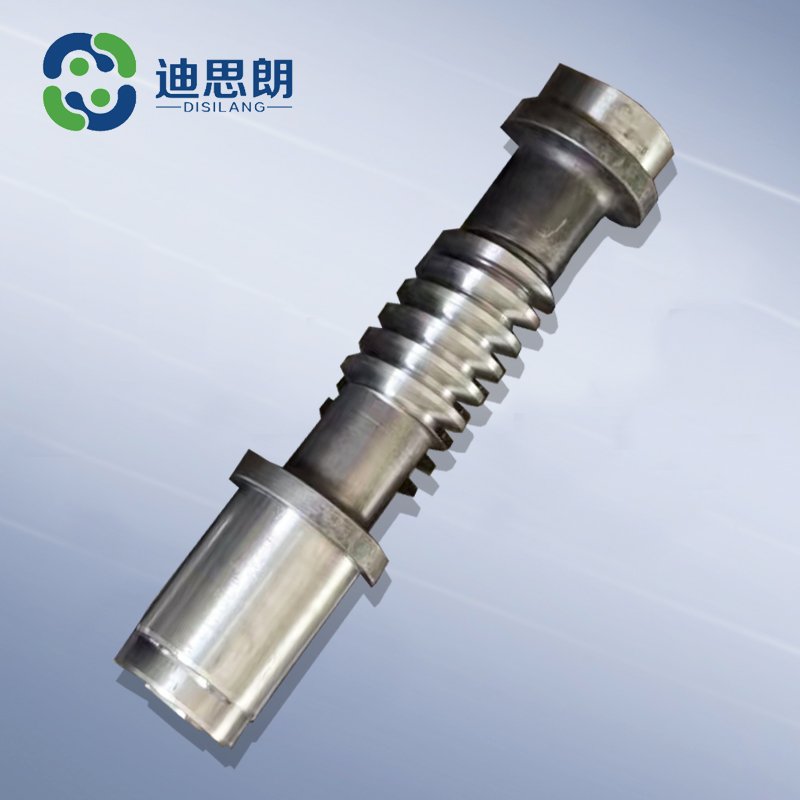
Description
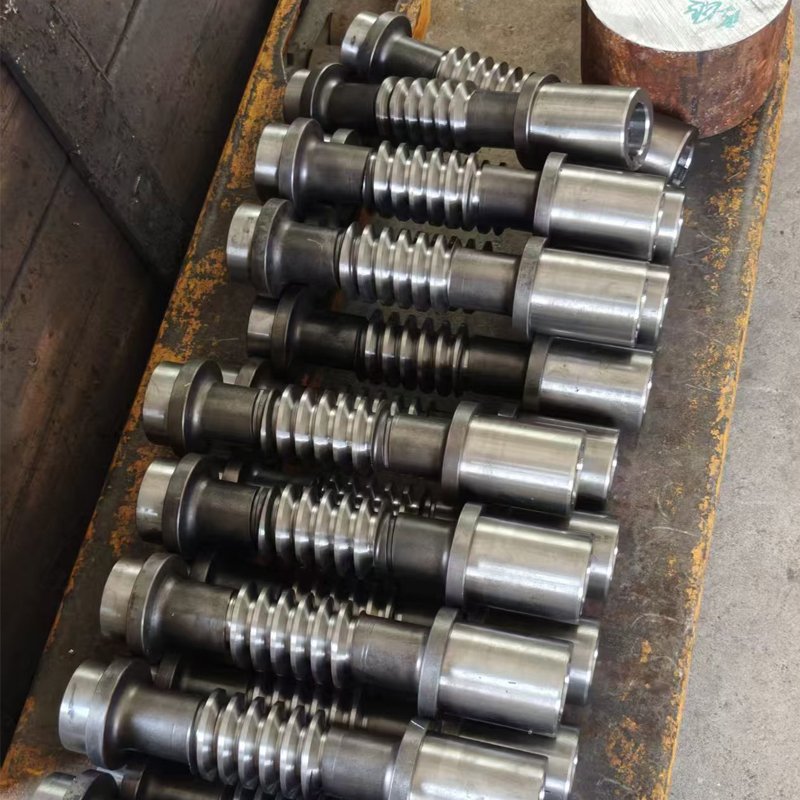
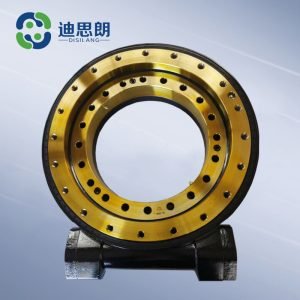
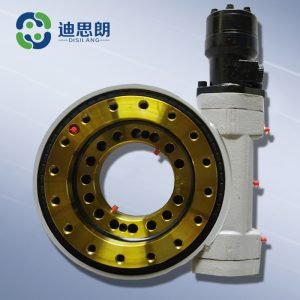
The main features of large modulus worms include large transmission ratio, compact structure, smooth transmission, low noise, self-locking and low efficiency. Specifically:
1. Large transmission ratio: The transmission ratio of large modulus worms is usually between 5 and 80, and can even reach more than 1000 in some applications, which gives it significant advantages in deceleration and acceleration.
2. Compact structure: Due to the helical tooth design of the worm, it has a small axial dimension when meshing with the worm wheel, high space utilization, and is suitable for use in space-constrained environments.
3. Smooth transmission: The continuous helical tooth design of the worm makes the meshing process progressive contact, small vibration, smooth transmission process, and low noise level.
4. Self-locking :When the lead angle of the worm is less than the equivalent friction angle between the tooth surfaces, the worm drive has a self-locking function, which can prevent the equipment from accidentally starting or reversing.
5. Low efficiency: Due to the large sliding friction in the worm drive, the friction and wear are large, and the efficiency is usually between 70%-90%, and the efficiency may be lower when self-locking.
6. In addition, the application scenarios of large modulus worms include reducers, hand hoists, lathe feed mechanisms, machine tool indexing heads, etc. These occasions require devices with large transmission ratios, compact structures, stable transmission and self-locking properties.
Reviews
There are no reviews yet.